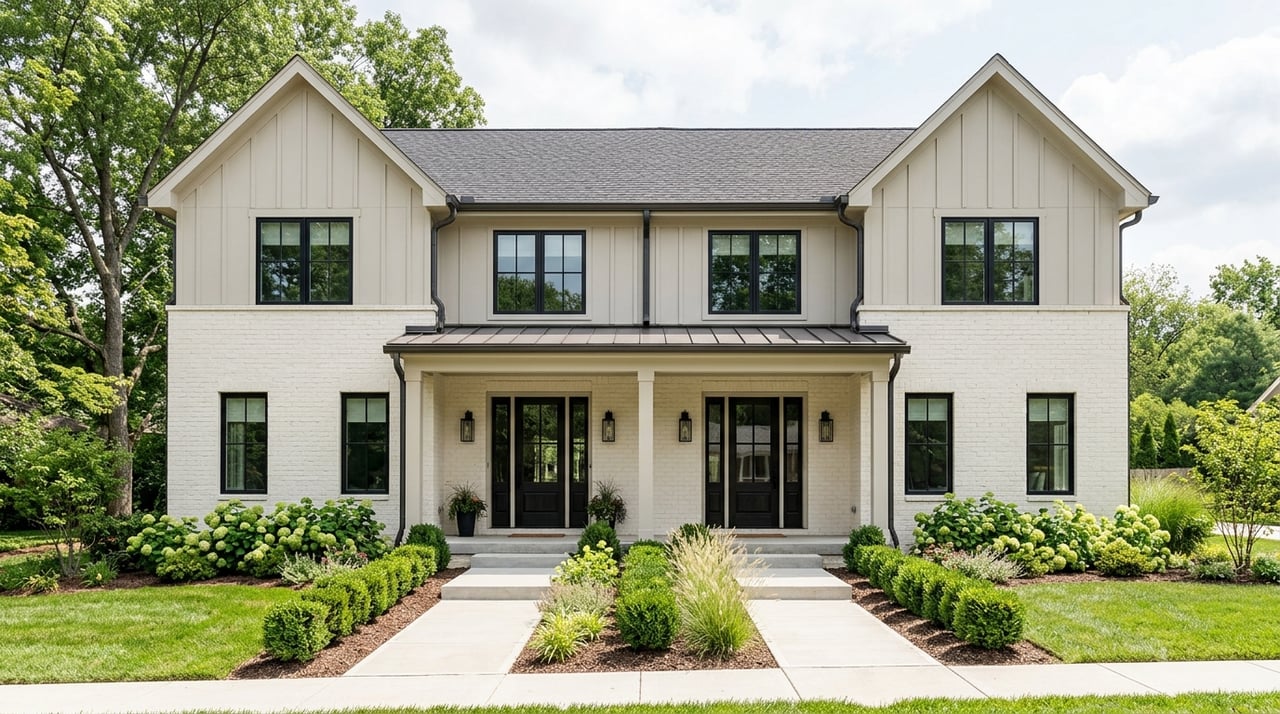
Cleveland TN Investment Property Overview For Buy-And-Hold
July 9, 2026
July 9, 2026
Buying a rental property in Cleveland, Tennessee can look simple at first glance. Rents are relatively affordable, the city keeps growing, and the local economy has several steady employment anchors. But if you plan to buy and hold, the real opportunity is not in chasing big headlines. It is in understanding how Cleveland’s job base, renter demand, housing costs, and property taxes work together so you can underwrite conservatively and buy with a clear plan. Let’s dive in.
Cleveland is the county seat of Bradley County, and both the city and county have grown since 2020. By 2025, Cleveland reached a population of 51,172, while Bradley County reached 115,465. That kind of growth matters for buy-and-hold investors because it supports long-term housing demand.
Access also helps Cleveland function well as a practical rental market. I-75 runs through the county, U.S. 11 and U.S. 64 meet in downtown Cleveland, and APD-40 loops around the business district. For tenants, that can mean easier commutes and broader housing search patterns across the area.
The local economic posture is another positive sign. Bradley County and the city maintain formal economic development organizations, including an Economic Development Council and an Industrial Development Board. That suggests an active local focus on business recruitment, job creation, and industrial growth.
For a buy-and-hold investor, stable tenant demand matters more than hype. Cleveland and Bradley County have a diverse employment base across manufacturing, healthcare, education, logistics, and public-sector work. Major employers listed by the local chamber include Whirlpool, Amazon, Life Care Centers of America, Bradley Medical Center, Lee University, Walmart, Bradley County Schools, and Cleveland City Schools.
The manufacturing base is especially important here. The chamber’s 2026 manufacturer list also includes Wacker Polysilicon, Eaton, Duracell, Olin, Jackson Furniture, and several food production and distribution employers. That mix can help support a broad renter pool rather than demand tied to a single employer or industry.
Education adds another layer of recurring rental demand. Lee University reports 3,876 students, and Cleveland State Community College serves about 3,500 credit students plus 1,500 non-credit students. That can support demand from students, staff, faculty, and nearby service workers who may prefer rental housing with more flexibility.
Labor data also points to a relatively steady market. In December 2024, Bradley County had a labor force of 50,997, resident employment of 49,121, and unemployment of 3.7%. BLS data for Q4 2025 reported covered employment of 40,714 and an average weekly wage of $1,162.
There is also evidence of future job growth. The city’s FY2023 audit reported $813.5 million in manufacturing project commitments expected to add more than 2,200 jobs. The same report noted that Spring Branch Industrial Park could support about 2 million square feet of manufacturing and distribution space and roughly 5,500 direct and indirect jobs at full build-out.
Cleveland looks more renter-oriented than Bradley County as a whole. Bradley County’s 2025 QuickFacts show a 67.3% owner-occupied rate, while Cleveland’s owner-occupied rate is 48.0%. For investors, that matters because it points to a city market with a larger renter presence and a stronger built-in rental audience.
Public housing data also shows meaningful scale without an obvious sign of oversupply. HUD’s Bradley County snapshot reported 46,536 total housing units in 2023, including 14,532 renter-occupied units and 973 units available for rent. That suggests a real rental base with active turnover, not a tiny niche market.
Home values and rents help frame the market too. The median owner-occupied value was $261,900 in Bradley County and $272,200 in Cleveland. Median gross rent was $1,030 countywide and $1,034 in the city.
The city also appears more price-sensitive than the county overall. Median household income in Cleveland was $58,559 compared with $66,552 countywide, and the poverty rate was higher in the city. For buy-and-hold owners, that is a reminder to stay grounded on affordability and focus on properties that fit broad local demand.
One of the easiest public references for investors is HUD’s Fair Market Rent schedule. For FY2026 in Cleveland, the published gross-rent benchmarks are:
These figures are not a promise of what any specific property will rent for. Still, they give you a practical starting point for underwriting and comparing unit sizes. They can be especially useful when you are screening deals quickly and want a public benchmark before doing deeper rent comps.
Public data does not provide a clean structure-type inventory in the research provided, so you do not want to overstate this point. Still, the available numbers support a reasonable working assumption. In Cleveland, the strongest buy-and-hold opportunities are likely to be detached homes and smaller multifamily properties near employers, schools, and commuter routes.
That approach fits the local demand profile. Cleveland’s renter base appears broad, with support from manufacturing, healthcare, logistics, education, and public employment. In markets like this, properties that appeal to everyday tenants often make more sense than properties that depend on premium rent positioning.
Location should be practical first. Proximity to major work centers, easy road access, and convenience to daily services may matter more than trying to target a narrow tenant niche.
Cleveland is not a market where loose underwriting makes sense. Public data suggests this is an income-driven buy-and-hold market where your margin comes from buying right, controlling expenses, and staying realistic about rent growth and vacancy.
A rough screen shows why. Annual gross rent equals about 4.6% to 4.7% of median owner-occupied value in the county and city based on the public figures provided. Using the county median owner value, the FY2026 two-bedroom fair market rent works out to about 5.65% of value before expenses.
That is not a cap rate, and it should not be treated like one. It is simply a reminder that Cleveland may reward disciplined investors more than aggressive ones. If you overestimate rent or underestimate expenses, your projected return can tighten quickly.
When reviewing a deal, make sure you model:
Because Tennessee does not levy a state income tax on earned income, your underwriting can stay focused on federal taxes and property-level operating costs. That does not eliminate expense pressure, but it does simplify one part of the analysis.
Property taxes are important to model correctly because city and county taxes work differently depending on location. Tennessee assesses residential property at 25% of appraised value. Cleveland’s FY2025 base city tax rate is $1.713 per $100 of assessed value, and Bradley County’s 2025 base county rate is $0.9922 per $100 of assessed value.
If your property is inside Cleveland city limits, you pay both city and county property taxes. If it is in unincorporated Bradley County, you generally pay the county rate only. That can create a meaningful difference in annual carrying cost.
On a $300,000 residential property, the research report estimates roughly $2,029 per year inside Cleveland city limits or about $744 per year in unincorporated Bradley County before any special levies. That is the kind of detail that can materially affect cash flow, especially when you compare otherwise similar properties.
In Cleveland, a strong buy-and-hold strategy usually starts with realism. You are looking at a growing city with a diverse job base, a meaningful renter population, and recurring demand tied to work, education, and everyday mobility. That is a solid foundation, but it is not a shortcut to easy returns.
A smart approach often includes a few key habits:
This is a market where execution matters. If you buy at the wrong basis, overspend on improvements, or stretch for rent that the local market will not support, the deal can get tight fast.
Buy-and-hold investing is rarely just about finding a property online. You also need to weigh city versus county tax exposure, neighborhood-level rent expectations, access to employers, and how a property fits the most likely tenant pool. That takes local context and clear decision-making.
If you are comparing Cleveland opportunities or trying to decide whether a rental should be inside the city or in unincorporated Bradley County, a local team can help you move faster and avoid expensive assumptions. That is especially true when you want a strategy that balances cash flow, long-term demand, and resale flexibility.
If you want help evaluating Cleveland investment property opportunities with a practical, numbers-first approach, connect with Dustin Mullins for a free consultation.
Stay up to date on the latest real estate trends.


I keep the process simple, strategic, and focused on results. You’ll get clear communication, fast responses, and a game plan built around your goals—whether you’re buying, selling, or investing in Chattanooga.
DUSTIN MULLINS
DOWNTOWN OFFICE 525 W Main St Chattanooga TN 37402